Supporting research
 An online Research Crash Course was developed by the Research Data Services Team, providing early-stage graduate students with a one-hour introduction to managing data. The course included three break-out sessions on managing qualitative data, quantitative data, and human subjects data. The program attracted students from disciplines across the University preparing to carry out major research projects.
Focusing on comprehensive and transparently reported literature searches, the Libraries’ Systematic Review Service has offered support and training for librarians outside of its traditional realm of health sciences since 2018. This year, the service has supported University research in several departments including psychology, educational psychology, agriculture, music therapy, journalism, genetic counseling, kinesiology, social work, and nutrition. This fall, U of M librarians received a three-year grant to train others outside of health sciences around the country in systematic reviews. In 2019-2020, two members of the Libraries’ systematic review service were involved in the global Ceres2030 project synthesizing agricultural evidence to determine solutions to end world hunger.
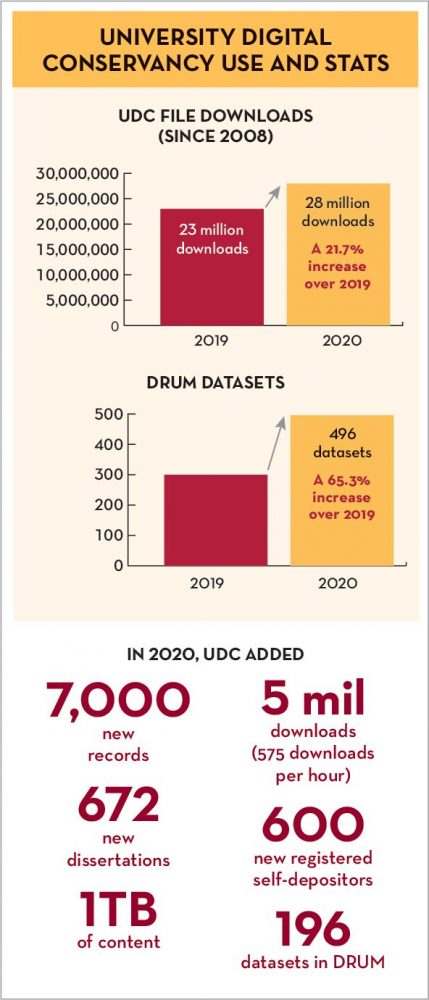
The University Digital Conservancy (UDC) holds more than 85,000 articles, University documents, dissertations, datasets, and more — and provides free, public access and long-term preservation to work created at the U of M.
Our Data Repository for the University of Minnesota (DRUM) is a place for U of M faculty, staff, and students to share, publish, and preserve their digital research data for long-term access and future use. Anyone can search and download the data housed in the repository, instantly or by request.
Our Publishing Services team has published 11,085 open access journal articles in 26 journals — nearly all journals have a U of M faculty member or student currently serving on the editorial board. Our journals represent disciplines from pharmacy to art history and media studies to ecology. Publishing Services has also published textbooks, conference proceedings, and monographs. U of M Libraries Publishing helps bring original research to readers across the globe.
Experts@Minnesota
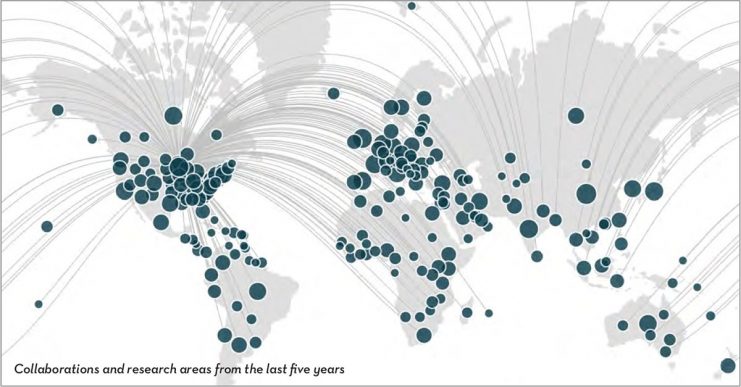
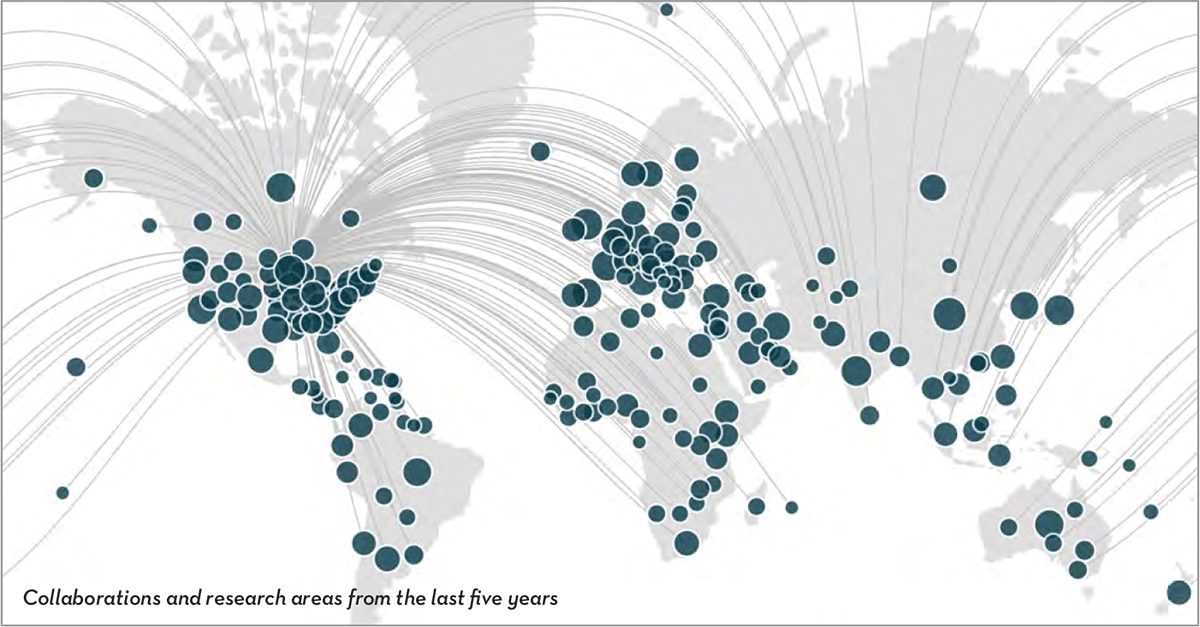
Experts@Minnesota displays research profiles for people at the U of M and feeds publication lists to U of M center and department websites. But it also saves the University money by providing ready-to-use data on University research outputs for reporting to funders. And it can demonstrate U of M collaborations among colleges or campuses or with researchers around the world.
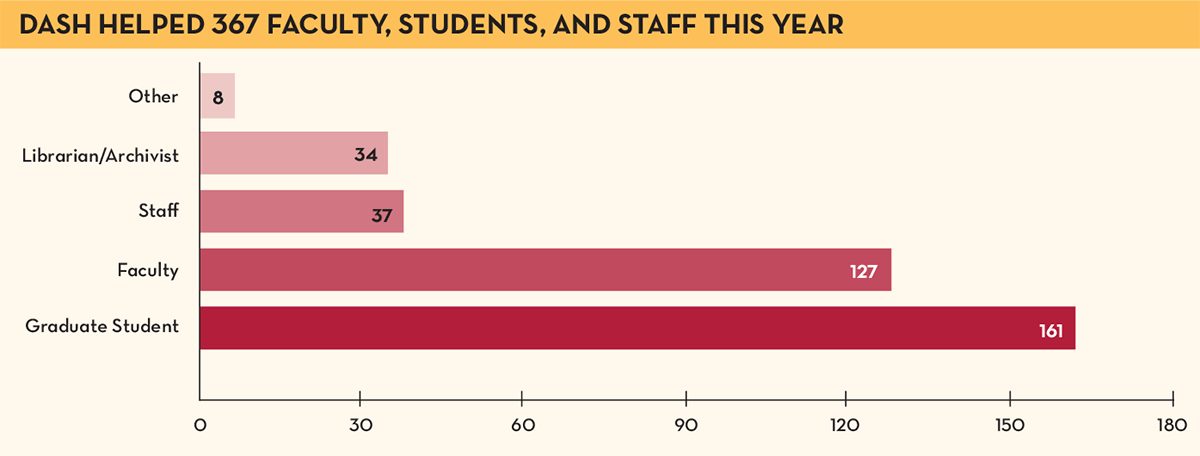
DASH helps faculty, students with digital technologies
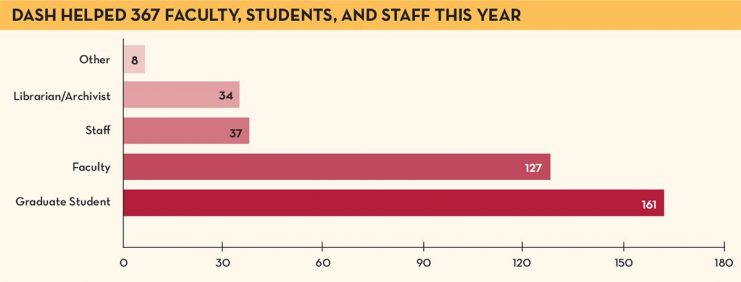
The Digital Arts, Sciences, and Humanities (DASH) program supports faculty and students who employ digital technologies in their research, teaching, and engagement work.
“This NEH grant was not just a vote of confidence in me, but in the whole DASH team.”
—Peter Mercer-Taylor, Professor, School of Music
“ I have appreciated DASH’s efforts to translate information about digital technologies into language that I can understand so that I have the necessary information to make the best decisions for my research project.”
—Julie Santella, Ph.D. student, Geography, Society, and Environment

 : For Students, Faculty, and Staff